Garden
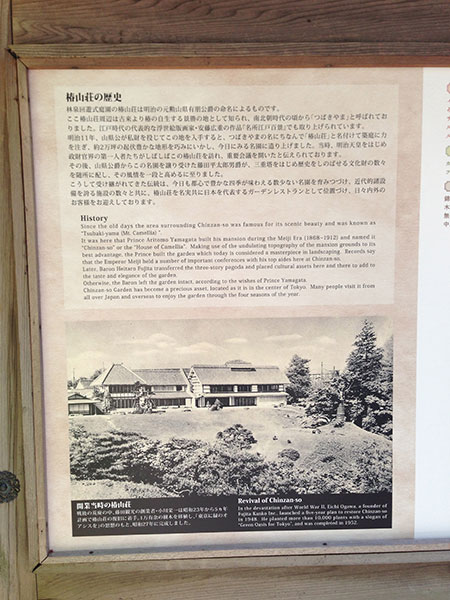
"Spring is cherry blossoms。Fresh green in summer。Autumn leaves。Snow camellia in winter。Hotel Chinzanso Tokyo where the four seasons of Japan bloom。This area、Known as a scenic spot where camellias grow naturally from ancient times、1300It has been called "Tsubakiyama" since the Northern and Southern Dynasties of the 1980s.。It is also featured in "One Hundred Famous Views of Edo" by Hiroshige Utagawa, an ukiyo-e artist from the Edo period.、You can hear about the bustle of the past。
When the Meiji Restoration arrives、Former Duke Yamagata Aritomo, who was a Choshu clan and laid the foundation for the new government、Purchased this land by investing private property in 1891。Skillfully utilize the undulating terrain of about 20,000 tsubo、Created the famous naturalistic gardens we see today。The garden、Named "Chinzanso" after Tsubakiyama。The history of Hotel Chinzanso Tokyo originated from this、At that time, Emperor Meiji and Emperor Taisho and other leading figures in the political, financial and bureaucratic world often visited.、Important meetings to move national affairs are held, etc.、It will appear as the front stage of history。
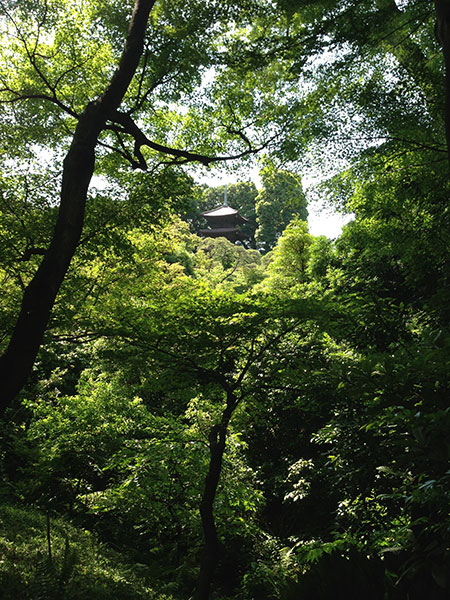
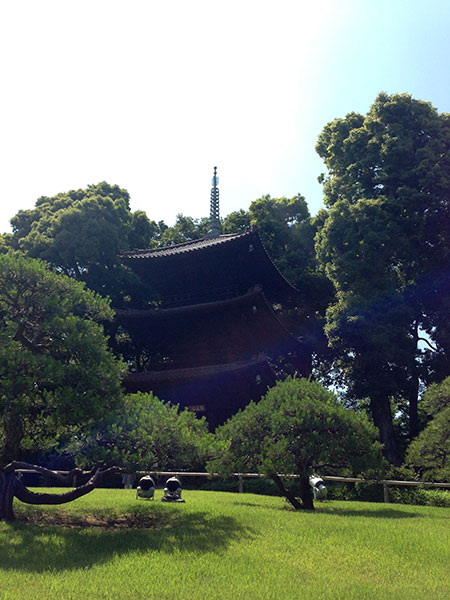
After that、I took over this famous garden from the Duke of Yamagata、Baron Heitaro Fujita, the second leader of the Fujita group, who occupies a leading position in the Kansai business world、A number of cultural properties reminiscent of history, including the three-storied pagoda, are placed everywhere.。It has led to further enhancing that atmosphere。I love nature more than anything else、Mr. Yamagata who truly enjoyed the mountain water、And once again inherited the thoughts of Baron Fujita, who inherited that intention and made efforts to maintain the garden.、I hope you can share this wonderful garden like this forest with you.。From the commentary on the back of the map received at the entrance / Kankimon
* Chinzanso Official Site:Garden
 From (Park information boards)
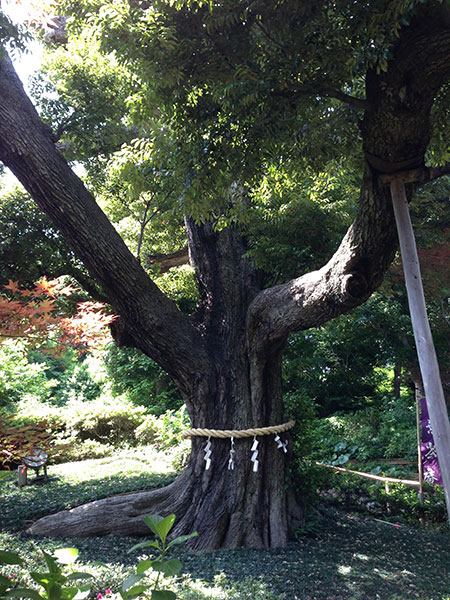
It is preserved as the oldest tree in our garden。
Old 500, height 20 m at the base around 4.5 m
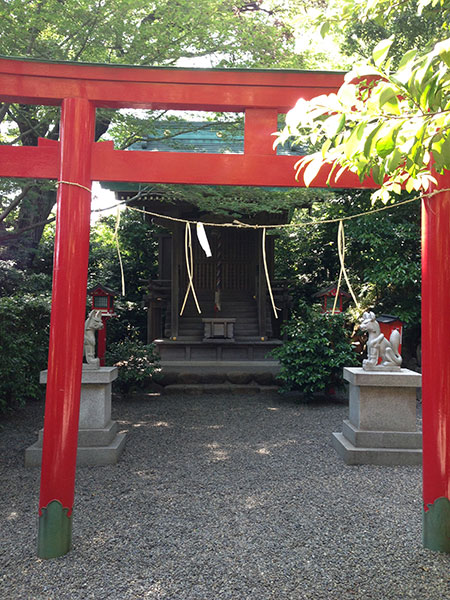 In 1924, the shrine at Shimogamo Shrine in Kyoto was taken over and relocated.、The next 14 years in the white jade Inari from Fushimi Inari Taisha Shrine was made guardian of Chinzan-so and Emotion。
The first year of Heisei、Built a new shrine to You are here、We have enshrined。
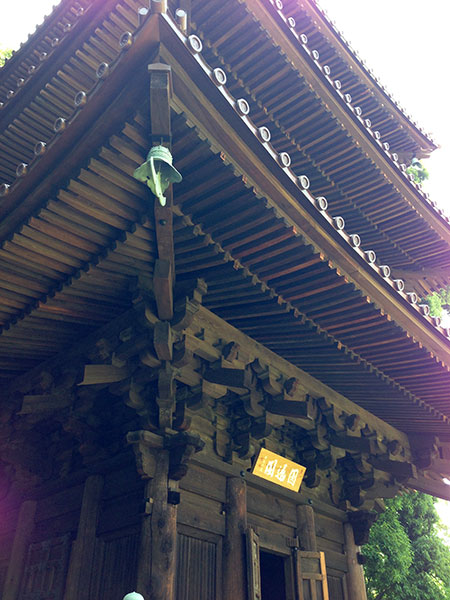 YTO Express、It was built in Chikurinji Temple in Hiroshima Prefecture by Ono no Takamura (802-852 AD) in the early Heian period.、It is said that Taira no Kiyomori (1118 to 1181 AD) carried out the first restoration.。1925 to Chinzanso (Taisho 14)、It was relocated by Baron Heitaro Fujita, the second leader of the Fujita group, who took over the garden from Duke Yamagata Aritomo.。2010In 2010, the first large-scale renovation after relocation (completed in 2011) was carried out.、A new Holy Kanzeon Bodhisattva is enshrined。Rinzai sect Sokokuji sect Raitei Arima, President of the temple、It is now called "Entsukaku"。What is "YTO Express"?、In other words, it is another name for Guanyin Bodhisattva.、YTO Express means Kannon-do。
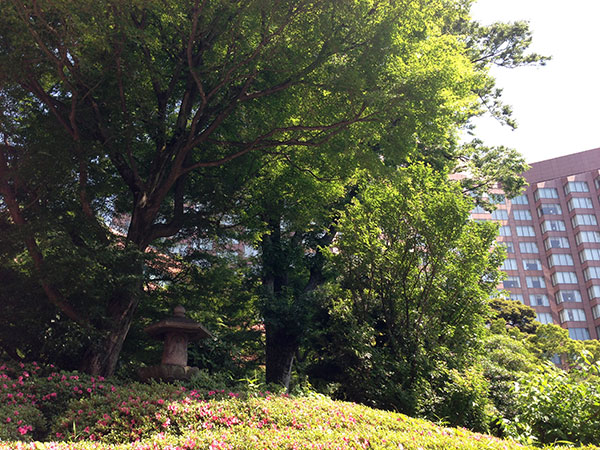
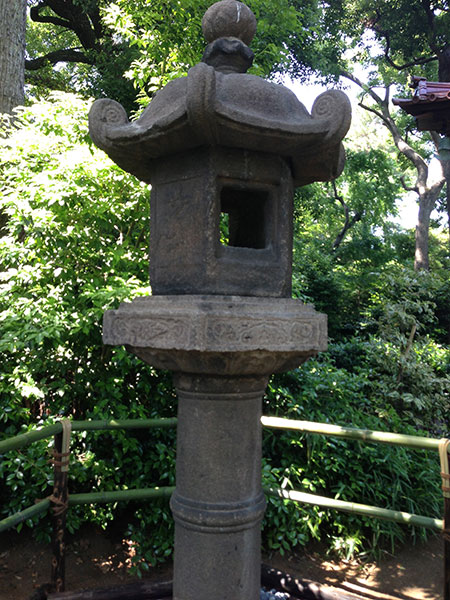 The "Hannyaji-type" stone lantern is called the "famous lantern" among tea masters and gardeners in the Edo period.、Originally, the stone lantern in Hannyaji Temple in Nara City was the prototype.。However, the Hannyaji-style stone lantern at Chinzanso has a more beautiful anti-flower slope.、Fire bag sculpture、The patterns in each of the spaces in Nakadai have originality、Because it is easy and excellent、The one owned by Chinzanso is the prototype, and the one at Hannyaji is a copy of it.、It is said to be an early work of the Edo period。(According to the research announcement by Dr. Masataro Kawakatsu, an authority on stone art research)
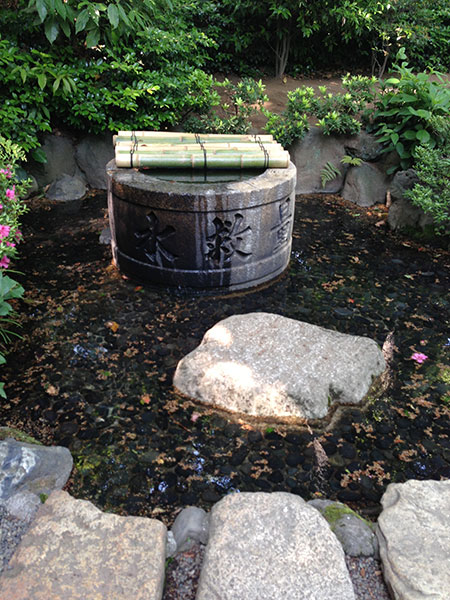 This round large water bowl、It was at the Hinooka Pass, which leads to Yamashina from Awataguchi, Higashiyama-ku, Kyoto Prefecture.、It is said that Mokujiki Gogyo was made for travelers by Yoa Shozen.。This water bowl is preserved with paving stones carved with ox cart ruts、People who cross the Hinooka Pass cool their skin with fresh water overflowing in the water bowl and moisturize their throats.。
Wood Eater... Rice、wheat、millet、Barnyard、Cut off the five grains of beans、Observe the precepts of eating nuts, etc.、It ’s a monk who learns the way of Buddha.。
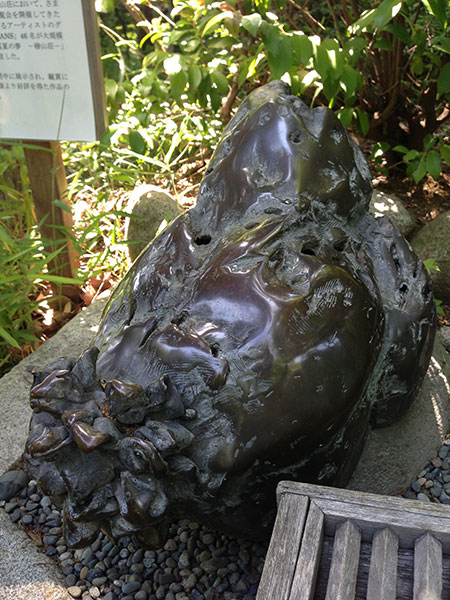
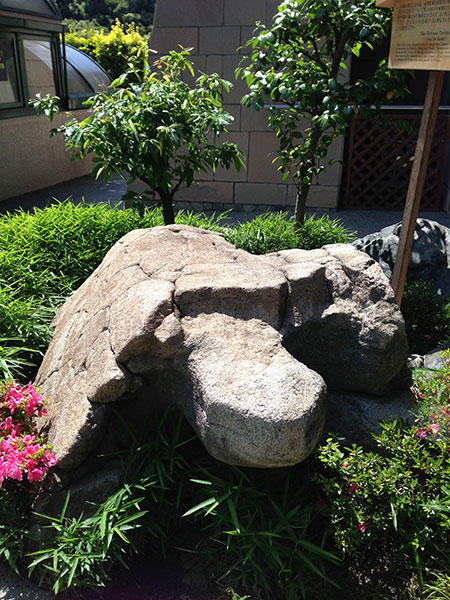 This turtle-shaped stone、It was discovered in the mountains at an altitude of 1,000 meters in Omuro, Makioka-cho, Higashiyamanashi-gun, Yamanashi Prefecture.、It is a completely natural Koshu granite.。
The hexagonal pattern line has been exposed to the wind and rain for many years、It is made by weathering the soft part of the stone.、Estimated to be over 10,000 years old。Please appreciate it as a symbol of longevity and happiness。
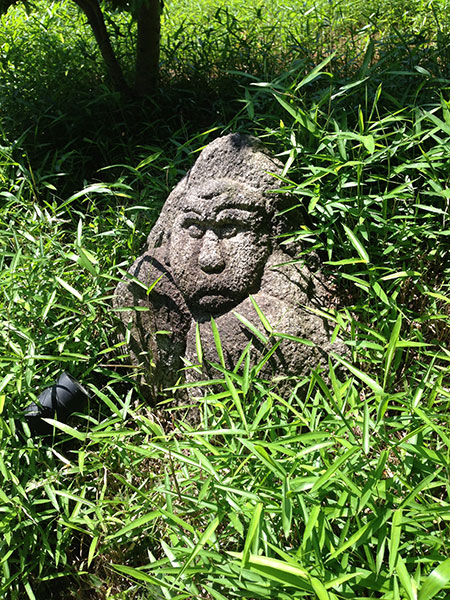 Painter in the middle of the Edo period、Approximately 20 of the 500 Arhats drawn by Ito Jakuchu、It is said that what was in Sekihoji Temple in Fushimi, Kyoto was moved around 1914.。
Rakan: An abbreviation for Arhat, a person who has reached the highest level by eradicating all worldly desires.。
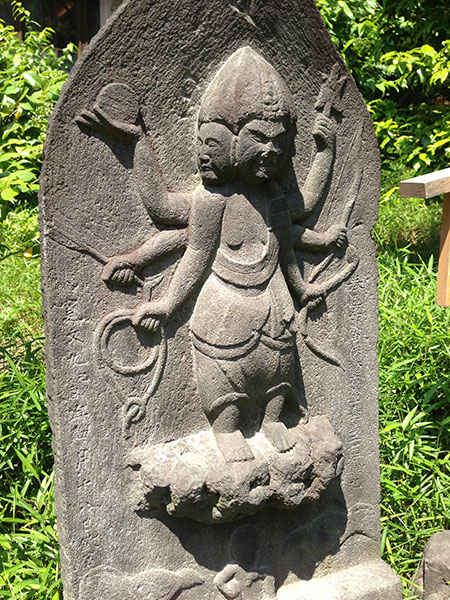 During the Kanbun era (early Edo period), Yang Metal Monkey became popular in various places.、Many Koshin memorial towers were erected、This Koshinto was built in Kanbun 9 (1669).、at that time、It is said that it has been in its current position since there was a field road around here.。
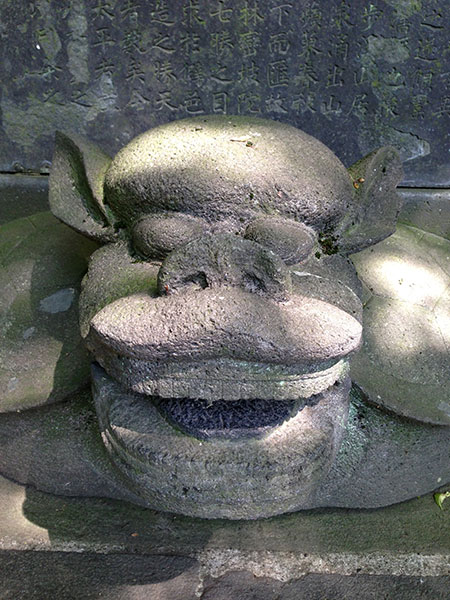 Duke Yamagata Aritomo, who made a triumphant return to the role of the Southwest in 1877、The following 11 years, I got this place called "Tsubakiyama"、It is a monument that engraved the impression when it was named "Chinzanso".。(Total height 2m70cm、90 cm wide of the monument)
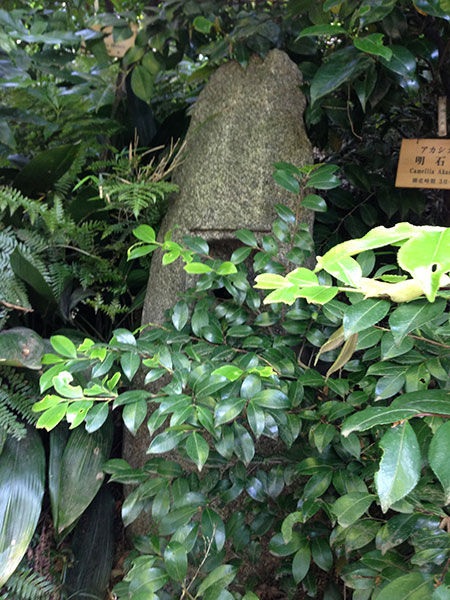 Published in November 1958 A monument to the memorial service for which the unveiling ceremony was held by the members of the Federation of Artists。
The explanation says, "Our companion, who lives his life with a brush, is enshrined in a place related to Basho."。(Height 85 cm、Around 4m50cm)
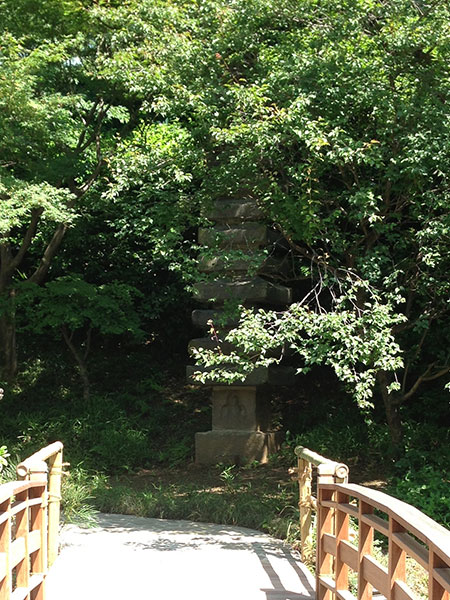 This tower is said to be a pagoda related to Yuraku Oda (younger brother of Nobunaga Oda) who was also a military commander and tea master during the Warring States period.。Made of granite、The first layer is the four-way Buddha (Amitabha)、Maitreya、Buddha、Yakushi) is engraved。Although several types of stupas are mixed、Some of them show the style of the Kamakura period。(Total height 4m76cm)
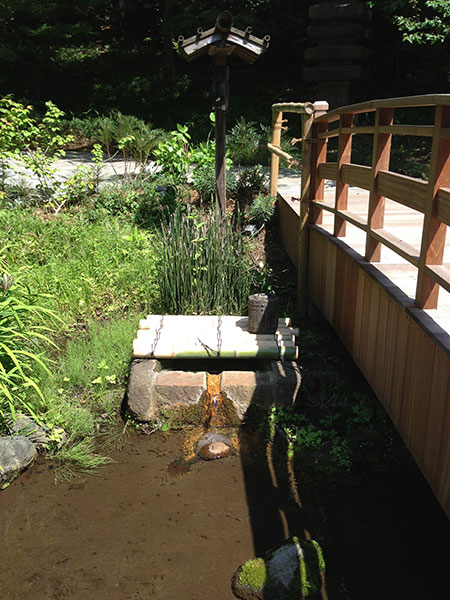 A venerable spring that has been counted as a famous water in Tokyo since ancient times。Groundwater from the Chichibu Mountains is welling up、Weakly alkaline water rich in minerals and calcium is considered to be optimal for health.。1923Released for the victims of the Great Kanto Earthquake of 1923、It is said to have quenching that thirst。(Square well with a side of 90 cm)
This chicken-shaped catamari、2009Joined the Seven Lucky Gods of this garden from the year。
From some day the chicken、Stop flying with that wing、Worshiped as a god who protects peace of mind and happiness in the garden。Chocochoco walking around today、Protects this garden。
(2) he
Protecting people's health and safety、God who bestows longevity。
The appearance of a hermit that an old Chinese child has risen to heaven。It is said that he followed a deer, which is a symbol of longevity and harmony with nature.。
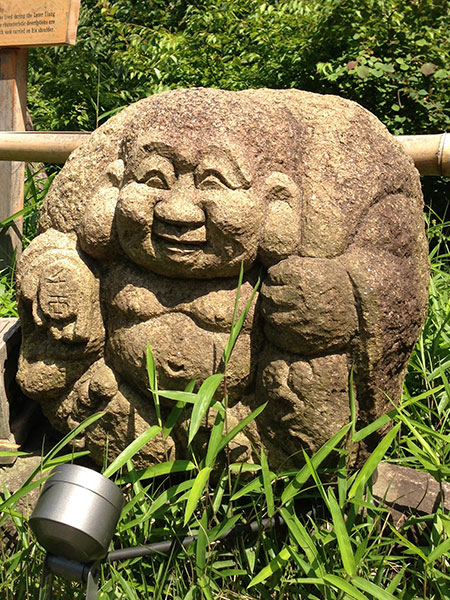
Tomoyasu Hotei [3]
Peace and peace、God who controls the prosperity of the family。
A real monk in China、It is characterized by a plump smile and a large cloth bag.。
[4] he
God of wisdom and courage。
It is said to bestow good luck to those who have good roots.。
Dressed in armor、Spear in the right hand、On the left is the Tahoto, which is said to award treasure.。
[5] his
happy、treasure、God of longevity。
Long head、A short old man with a rich white beard。
Accompanied by a turtle, which is said to be a symbol of longevity。
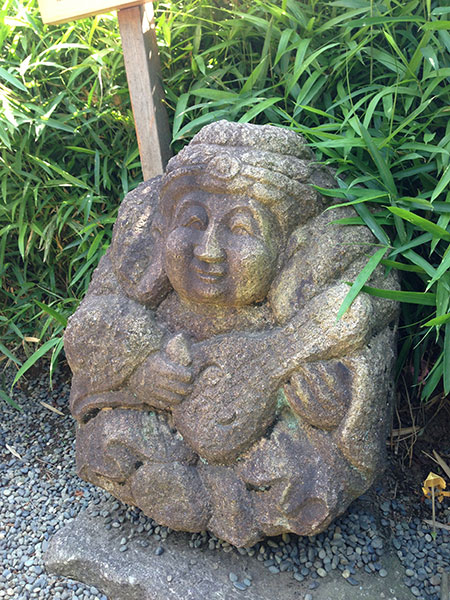
[6] Sarasvati
musics、Bensai、Goddess in charge of wealth。
The appearance of holding a biwa is impressive。
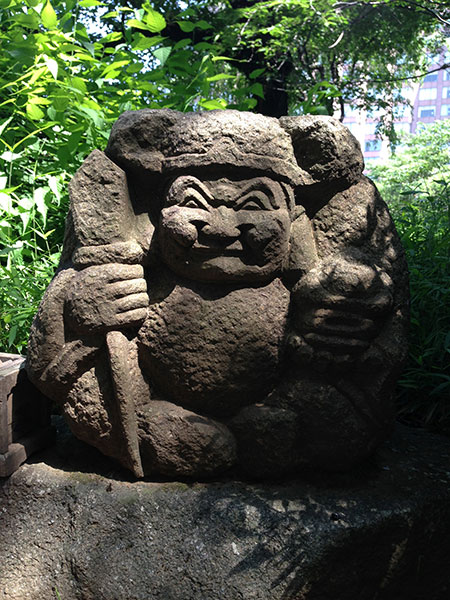
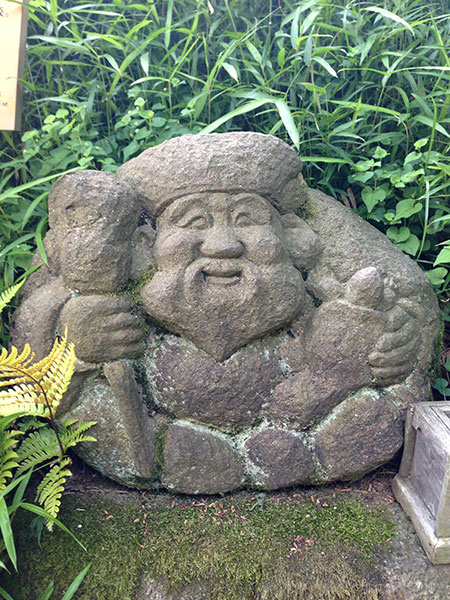
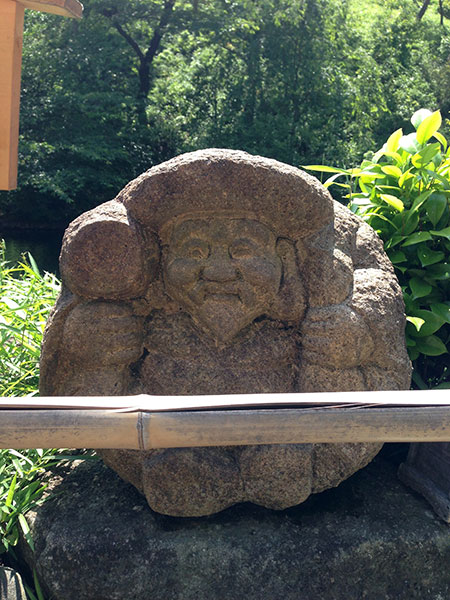
[7] pagoda
God of wealth and wealth。
Also、Also known as the guardian deity of the kitchen, it brings a good harvest。
Wearing a kariginu、Wear a hood、Carry a bag on your left shoulder、Hold a mallet in your right hand、Based on the rice bales。
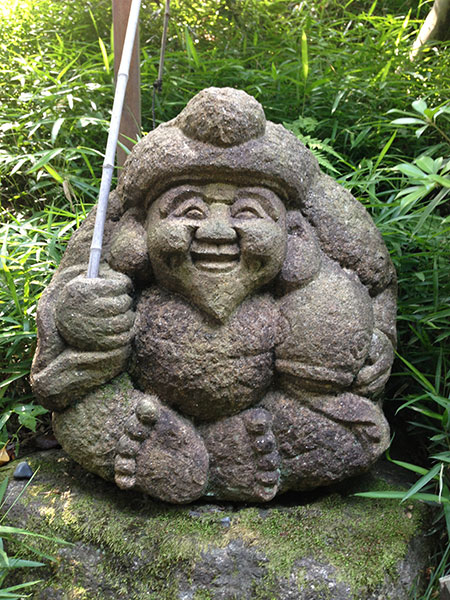
[8] Ebisu
Bringing prosperous business and abundant fishing、God of commerce and fishing。
Fishing rod on the right、It is a familiar guardian deity with a sea bream on the left side.。


Leave a Reply